


PLENARY SPEAKERS
The plenary session will take place on the first morning of the conference, September 28 from 9:00 am to 12:00 pm.
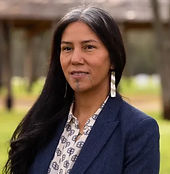
Vice Chair Malissa Tayaba
Vice-Chairperson and Director of Traditional Ecological Knowledge of the Shingle Springs Band of Miwok Indians
Malissa Tayaba is the Vice-Chairperson of the Shingle Springs Band of Miwok Indians. She is also the Director of Traditional Ecological Knowledge (TEK). Her work includes: sharing the ways aboriginal territory and its natural resources have historically been, and continue to be, utilized and tended to by Nisenan and Miwok people and bringing cultural activities back into the tribal community, such as basketry, traditional song and dance, ceremony, land stewardship, and language revitalization. Before becoming TEK Director, Malissa spent six years as a Cultural Researcher and ten years as Director of Social Services. She was a member of the Delta Conveyance Project Stakeholder Engagement Committee and a member of the Delta Protection Commission’s National Heritage Area Management Plan Advisory Committee.
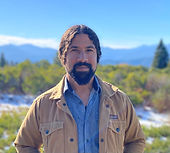
Rene Henery
California Science Director, Trout Unlimited and Research Faculty at the University of Nevada, Reno Global Water Center. Rene also serves as co-chair of the 2026 Bay-Delta Science Conference planning team.
Rene is an ecologist, eco-geographer and artist who holds a joint position with Trout Unlimited and the University of Nevada, Reno’s Tahoe Institute for Global Sustainability. Rene is a thought leader in coherence-based strategy and its application to collaborative ecosystem stewardship. His work advances landscape-scale approaches to species recovery and watershed regeneration that integrate science and policy and bridge diverse human values and interests. Rene works across the pacific salmon landscape, with a particular focus on California’s Central Valley and the San Francisco Bay-Delta Estuary. Common to all of Rene’s work is an orientation towards systemic health and healing, and transition away from oppositional politics, polarization, and transactional relationships towards connection and belonging. Rene serves as the co-chair of the 2026 Bay-Delta Science Conference.
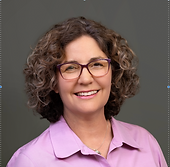
Letitia Grenier
Director of the PPIC Water Policy Center. Letitia also serves as co-chair of the 2026 Bay-Delta Science Conference planning team.
Letitia is director of the PPIC Water Policy Center, where she is also a senior fellow and holds the Ellen Hanak Chair in Water Policy. Letitia previously directed the Resilient Landscapes Program of the San Francisco Estuary Institute, leading a team that completed seminal work on understanding and restoring Delta ecosystems. In 2020, Letitia was the PPIC CalTrout Ecosystem Fellow, for which she completed a report on smarter permitting for restoration of freshwater ecosystems. In 2019 and 2015, she served as the science lead for the State of the Estuary Report, and she was also the science lead for the 2015 update to the Baylands Ecosystem Habitat Goals, heading a team of over 200 environmental scientists, managers, and regulators to develop recommendations for managing San Francisco Bay's wetlands in the face of rising sea levels. Throughout her career, Letitia has worked with partners to conserve California’s resources by developing landscape-scale, collaborative visions and solutions. Letitia serves as the co-chair of the 2026 Bay-Delta Science Conference.
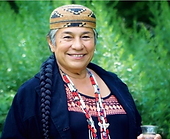
Chief Caleen Sisk
Tribal Chief and Spiritual Leader of the Winnemem Wintu Tribe
Bio coming soon...
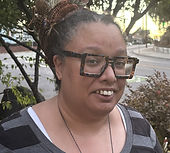
Phoenix Armenta
Policy Innovation Team Lead at the Governor's Office of Land Use and Climate Innovation (LCI)
Phoenix Armenta is the Policy Innovation Team Lead at the Governor’s Office of Land Use and Climate Innovation. In their previous role as Sr. Manager for Climate Equity and Community Engagement at the SF Bay Conservation and Development Commission, they worked to operationalize equity and environmental justice across the agency, especially focusing on BCDC’s permitting and planning processes. Before their time with the state, they worked with numerous CBO’s such as the Mycelium Youth Network and the West Oakland Environmental Indicators Project and have been an equity advisor to several regional projects including BayCAN, BCDC BayAdapt, and Resilient by Design. They hold a B.A. in Anthropology from Howard University and an M.A. in Energy and Resources from UC Berkeley, with a specialty in Environmental Justice and Social Movement Theory.
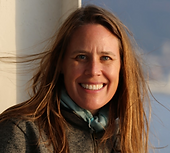
Lisamarie Windham-Myers
Delta Lead Scientist
Lisamarie is the current Delta lead scientist. In this role, she oversees the Delta Science Program and consults regularly with partner agencies, as well as the Delta Stewardship Council and its executive officer, chief deputy executive officer, and the deputy executive officer for science. Lisamarie is a systems ecologist with the United States Geological Survey. She received her Ph.D. from Rutgers University in Ecology, Evolution, and Natural Resources and was a professor at Lehigh University before joining the United States Geological Survey. Her research examines processes at the interface of land and aquatic systems, including water flow, storage, and quality at landscape scales. She also examines fine-scale processes in soils and has studied extensively the conditions in wetlands and estuaries that sequester and release greenhouse gases, and control methylmercury dynamics. She has authored or co-authored over 100 peer-reviewed papers, represented the U.S. on multiple international panels and working groups associated with climate change mitigation, and led or served in many U.S. interagency programs evaluating nature-based solutions for carbon sequestration.

Dr. Rachel Wigginton
Plenary Session Emcee
Dr. Rachel Wigginton is the Special Assistant for Planning and Science at the Delta Stewardship Council. Rachel was appointed to this position by Governor Newsom on January 14, 2026. In this role, she facilitates the Delta Plan Interagency Implementation Committee and its subcommittees, an 18-agency body composed of state and federal organizations and supports other planning- and science-related initiatives within the Council. Prior to coming to the Council, Rachel was a senior environmental scientist for the Sacramento-San Joaquin Delta Conservancy where she provided science support to the Conservancy’s grant program and led work on invasive species, drought, and environmental compliance. Rachel began her state services as a coastal scientist with the San Francisco Bay Conservation and Development Commission working on Suisun Marsh policy and sea level rise adaptation. Rachel is a wetland ecologist who has earned a Doctor of Philosophy degree in ecology from the University of California, Davis, a Master of Science degree in biology from California State University, Long Beach, and a Bachelor of Science degree in biology from Western Kentucky University. Outside of work, Rachel enjoys reading, taking long walks with her dog, and camping.